Though the connections between programming languages and mathematics, logic, and philosophy are perhaps best-known,
a growing body of research has established connections with creative domains, including both liberal arts (linguistics) and fine arts (music, fiber crafts, live stage performance, visual art).
Programming language technologies have proven their impact in creative industries.
Starting with early programmable automation, like the Jacquard loom, programming remains essential to the textile industry, often through computer-aided design applications.
In live arts, musicians and stage performers use code as an instrument.
Programming is a vital tool, particularly in interactive digital media, for generating visual art content at scale.
At the same time, academics have proposed new theoretical foundations for programming across these domains:
refinement types for music,
topology and homotopy type theory for fabric crafts,
logic programming for procedural content generation.
However, these applied and foundational developments have largely occurred in isolation from one another.
Meeting focus:
The focus of this meeting is to build a bridge between foundational and applied scholarship on programming languages for creative domains such as the liberal and fine arts.
We will address the following three research questions:
-
RQ1: How can foundational techniques support creativity?
-
RQ2: What opportunities arise from the unique aspects of creative programming?
-
RQ3: How can techniques from creative fields inform development of general-purpose programming languages?
Sunday, September 28th: Check-in
- 15:00-19:00 Check-in
- 19:00-21:00 Welcome Banquet
Monday, September 29th: Background and applications
- 9:00-10:30 Introductions + Icebreaker (Chair: Jim)
- 10:30-11:00 Break
- 11:00-12:05 Talks (Chair: Youyou [叢 悠悠])
- Roly Perera
- Didier Verna
- Chris Barker
- 12:05-13:30 Lunch
- 13:30-14:00 Group photo
- 14:00-15:15 Talks (Chair: Rose [ボーラ・ローズ])
- Gillian Smith
- Jim McCann
- Chris Martens
- Stefan K. Muller & Hannah Ringler
- Katsuhiro Ueno
- 15:15-15:30 Determine Group Discussion Topics
- 15:30-16:00 Break
- 16:00-17:30 Demo: Quilts (Gillian and Rose [ボーラ・ローズ])
- 17:30-18:00 Break
- 18:00-19:30 Dinner
- 20:00-21:30 Demo: The Art, Craftsmanship, and Science of Typography (Didier)
Tuesday, September 30th: Approaches and Specifics
- 9:00-10:00 Talks
- Ravi Chugh
- José Calderón
- Paige Randall North
- Carlo Angiuli
- 10:00-10:30 Demo: Music (Youyou Cong [叢 悠悠])
- 10:30-11:00 Break
- 11:00-12:00 Demo: Story Telling etc. and Parser (Jens and Chris Barker)
- 12:00-13:30 Lunch
- 13:30-18:15 Excursion: Tea Ceremony in Kamakura [鎌倉]
- 18:15-21:00 Main Banquet
Wednesday, October 1st:
- 9:00-10:30 Demos:
- Animation (Katsuhiro Ueno)
- Possibility Spaces (Chris Martens)
- 10:30-11:00 Break
- 11:00-12:00 Discussion
- 12:00-13:30 Lunch
- 13:30-15:30 Structured Discussion
- 15:30-16:00 Break
- 16:00-16:20 Talk: Example-based, Live, Exploratory; Babylonian -- Sandblocks -- Exploriants (Robert)
- 16:20-17:30 Demo: Machine Knitting with Knitout (Jim)
- 17:30-18:00 Break
- 18:00-19:30 Dinner
Thursday, October 2nd:
- 9:00-10:30 Brainstorm: Next Steps
- 11:00-12:00 Yosegaki (Messages) activity
- 12:00-13:30 (Last) Lunch
Organizers:
- Youyou Cong [叢 悠悠] - Institute of Science Tokyo, Tokyo, JP
- Rose Bohrer [ボーラ・ローズ] - National Institute of Advanced Industrial Science and Technology (AIST), Tokyo, JP
- James (Jim) McCann - Carnegie Mellon University, Pittsburgh, USA
Invitees:
- Gillian Smith - Worcester Polytechnic Institute
- Ravi Chugh - University of Chicago
- Jens Mönig - SAP
- Paige North - Utrecht University
- Stefan Muller - University of Connecticut
- Hannah Ringler - Illinois Institute of Technology
- Didier Verna - EPITA Research and Development Laboratory
- Chris Barker - New York University
- Chris Martens - Northeastern University
- Carlo Angiuli - Indiana University
- Robert Hirschfeld - Hasso Plattner Institute, University of Potsdam
- Katsuhiro Ueno - Niigata University
- Roly Perera - University of Cambridge
- José Calderón - Haskell Foundation
Instructions and Advice for Attendees
- For the excursion day, dress comfortably, but be prepared for mosquitos.
- We hope to create a relaxed and comfortable atmosphere. Talking in depth about all different topics is one of the best parts of a Shonan meeting, but if you discover a certain topic is sensitive for someone else, please be considerate (such as world events).
- Travel Advice for Japan:
- Be prepared for hot and humid weather, as well as typhoons.
- There are few public trash cans, so you will need to either take your trash with you or throw it out near where you got it.
- Airport trains can get crowded with luggage. Consider a luggage forwarding service.
- Visitors to Japan sometimes worry about showing good manners because they want to be considerate.
Don’t overthink it, just avoid bothering people in public: trains are quiet spaces and people respect each other’s personal bubbles on the street.
Just apologize if you bother someone. It’s polite to ask before talking to strangers in English, as some people are not confident in their English skills.
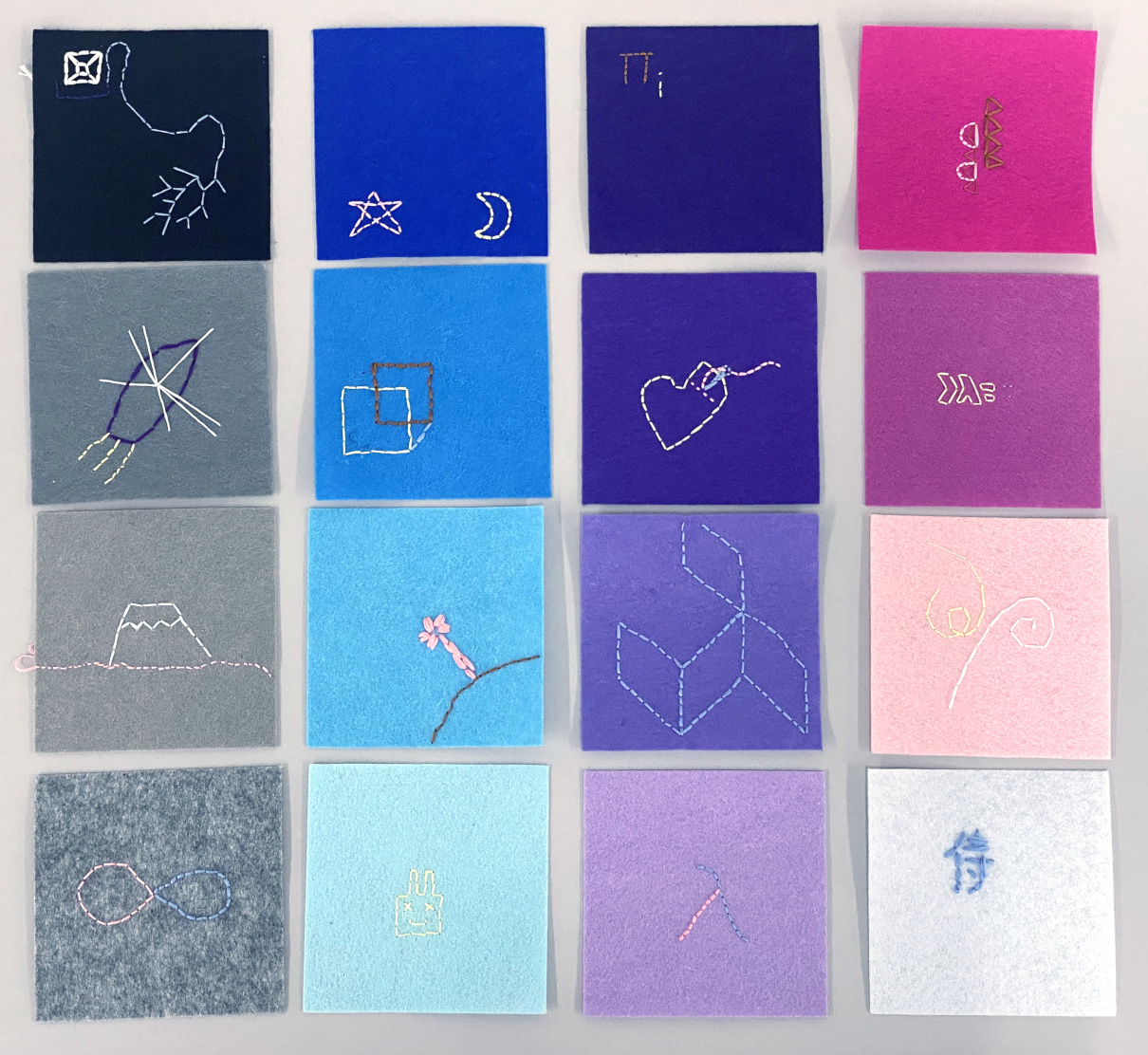
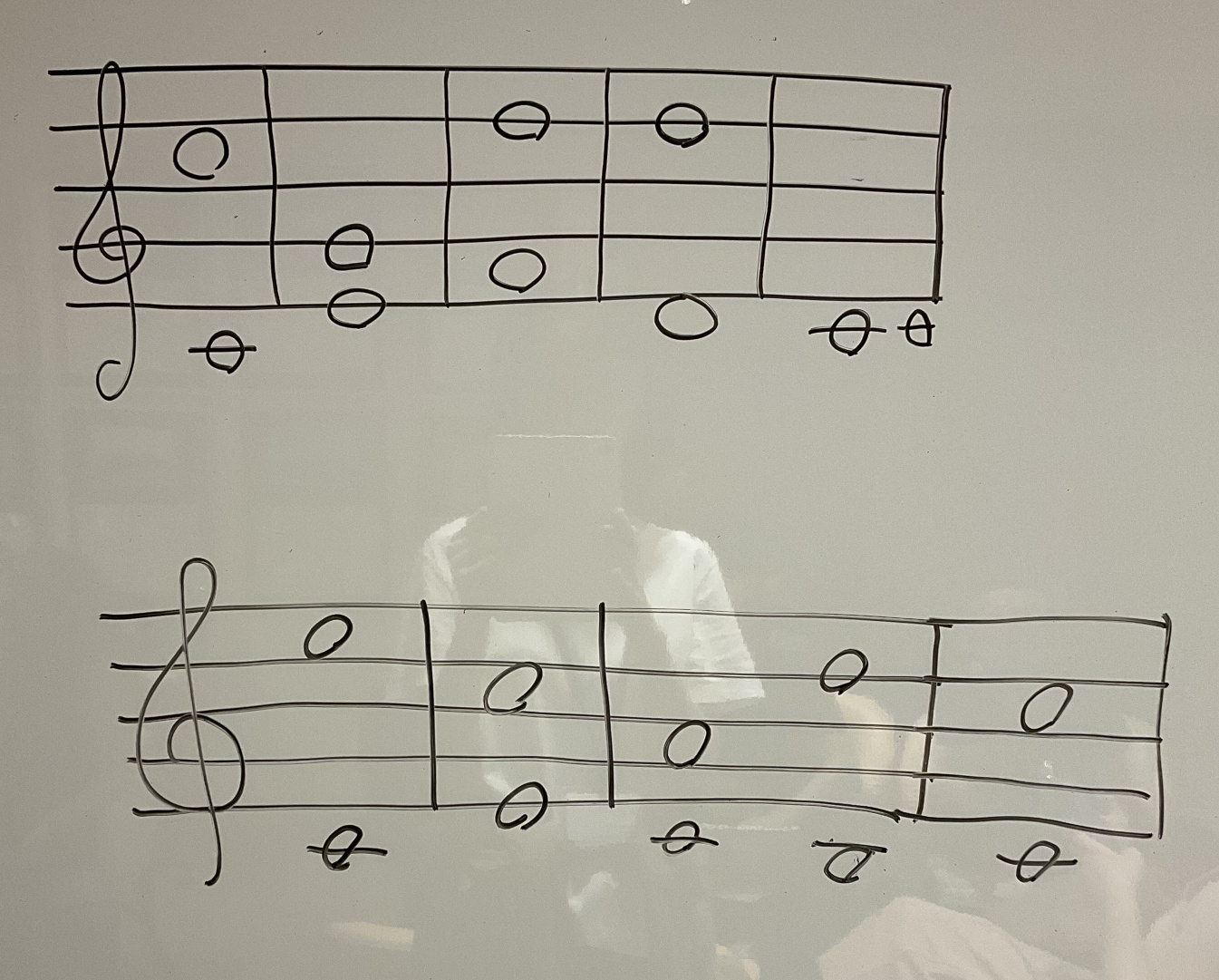
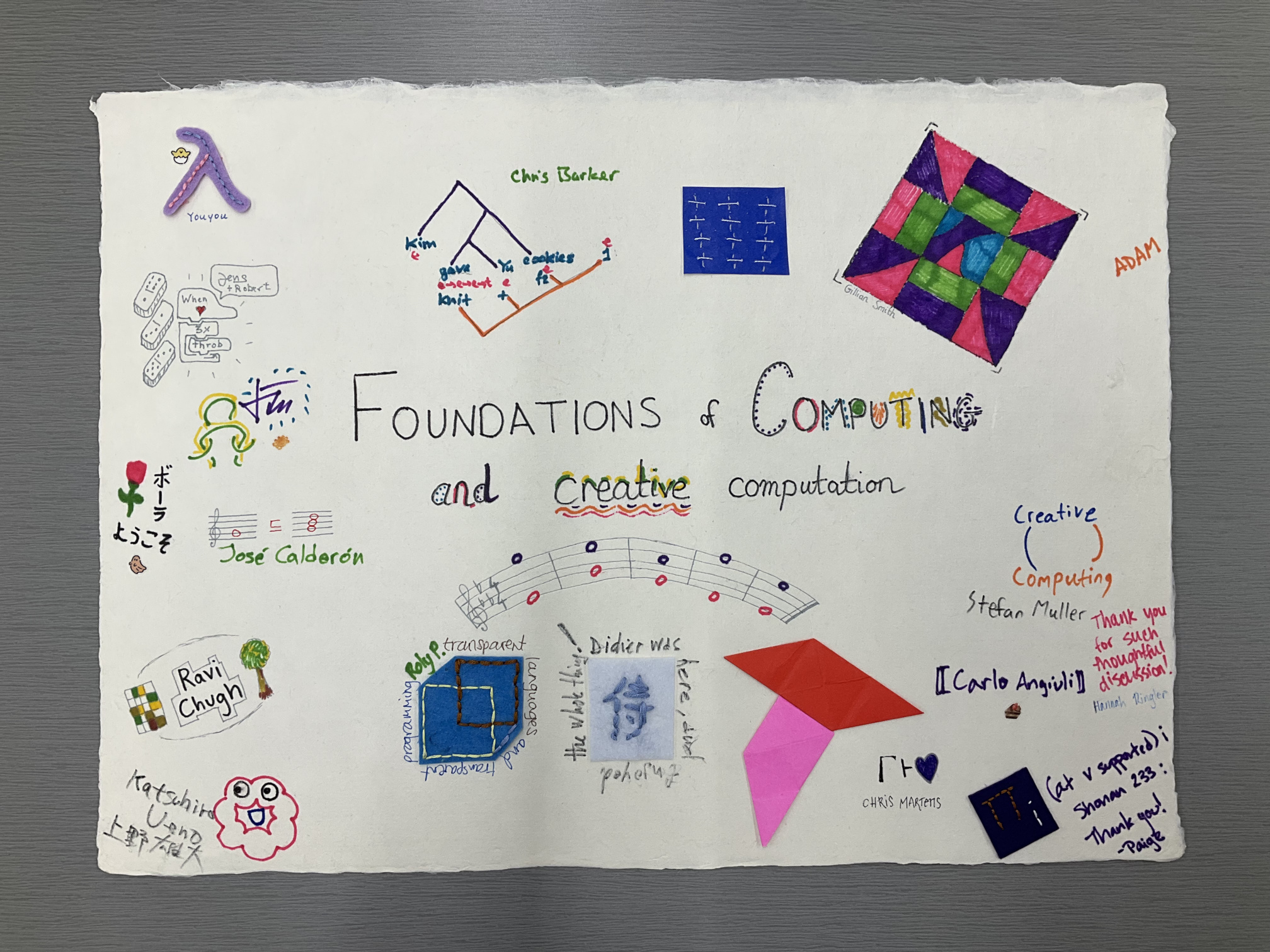
Things created by the participants during the workshop.
Read-outs, slides, and notes from the sessions will be posted.
(Some may be password-protected.)